From Static Files to Intelligent Decision Systems
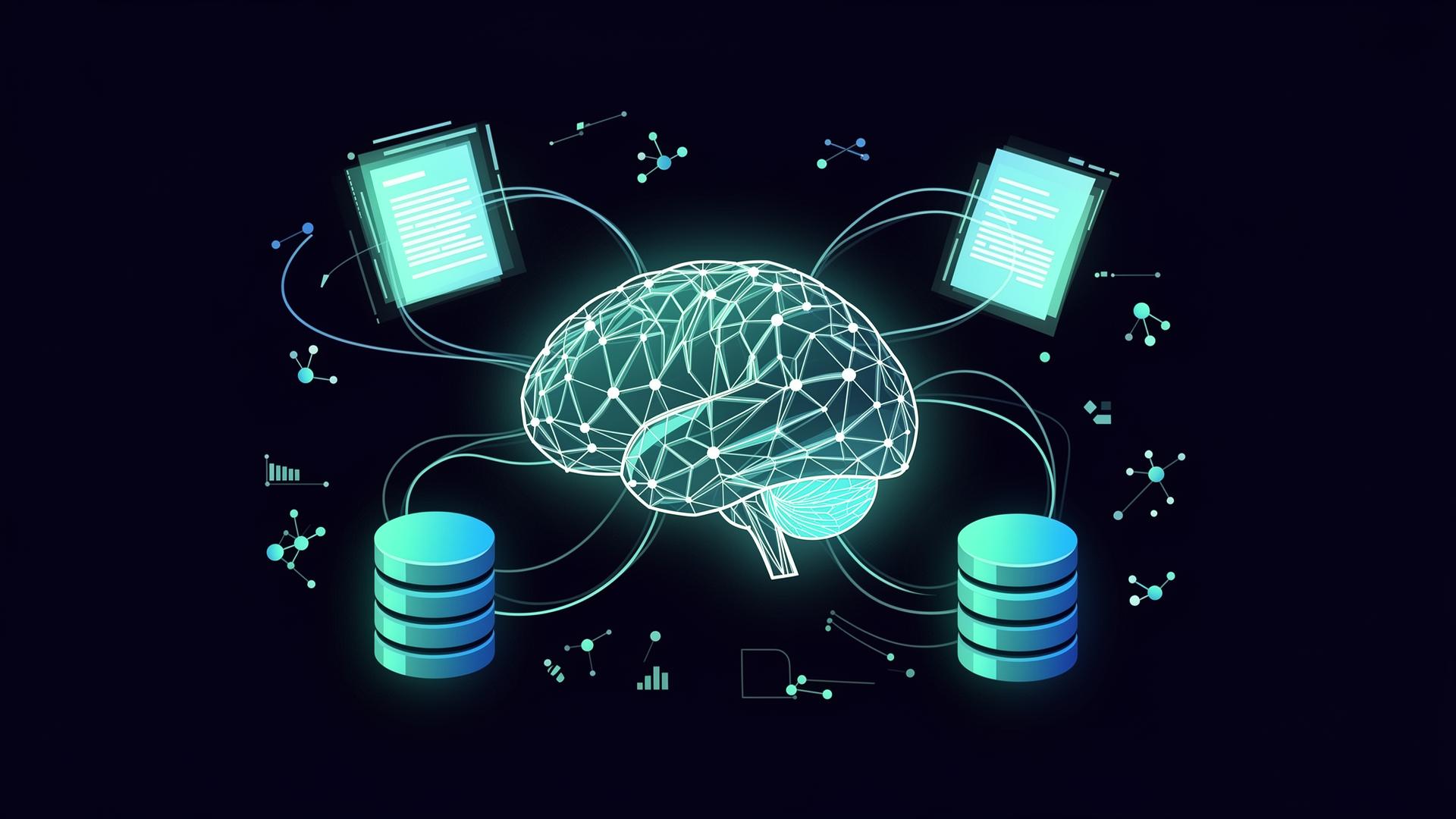
Traditional document management systems have not had trouble because many enterprise storage systems store your information well. But AI-powered document management changes that by transforming unstructured data—contracts, reports, internal knowledge—into a dynamic intelligence layer that actively supports business decisions.
The problem is no longer storing information, but making it usable, reliable, and actionable in real time. Traditional systems fall short because they fail to understand the context between two or more documents or information sources.
At the core of this transformation is RAG in generative AI (Retrieval Augmented Generation).
What is Retrieval Augmented Generation (RAG) in Generative AI?
Retrieval augmented generation (RAG) is an architecture that connects large language models (LLMs) with your company’s internal knowledge base. Instead of relying only on pre-trained data, the model retrieves relevant, real-time information before generating a response.
This ensures that every output is grounded in your organization’s actual data—reducing hallucinations and increasing trust.
For executives, this means AI that doesn’t just sound intelligent—it is aligned with your business reality.
LLM vs RAG in Generative AI: What You Need to Understand
A common misconception is that all AI works the same. It doesn’t, and this distinction is critical for business impact.
LLM (Large Language Model)
An LLM generates responses based on the data it was trained on, which includes large volumes of publicly available information and generalized internet content.
- It does not access your internal systems
- It does not retrieve real-time company data
- It can produce answers that sound correct but are not business-accurate
In practice: an LLM gives you general intelligence, not company-specific insight.
RAG (Retrieval Augmented Generation)
RAG in generative AI enhances the LLM by connecting it to your internal data sources.
- Retrieves information from your own documents and databases
- Grounds every response in real business context
- Ensures outputs are relevant, accurate, and up to date
In practice: RAG allows AI to respond using your documents, your data, your reality.
The Strategic Difference
- LLM: knowledge similar to public data and internet-scale information
- RAG: knowledge built on your company’s private documents
This is the difference between an AI that is impressive… and one that is actually useful in operations and decision-making.
How RAG Powers AI-Driven Document Management
An AI-powered document management system built with RAG operates in three key layers:
Data Structuring and Indexing
Unstructured documents (PDFs, CRMs, databases, internal docs) are converted into vector representations, enabling semantic search.
Intelligent Retrieval
The system identifies and retrieves the most relevant information based on context, not just keywords.
Context-Aware Generation
The AI generates responses using both the query and the retrieved data, ensuring accuracy and business alignment.
The result: a system that behaves less like storage and more like a real-time strategic advisor.
Why This Matters at the Business Core
Adopting retrieval augmented generation (RAG) within your document ecosystem directly impacts core business outcomes:
- Faster, more informed decision-making
- Reduced operational friction across teams
- Higher accuracy in automated outputs
- Lower risk in compliance and reporting
- Scalable knowledge management without retraining models
It’s a shift in how organizations leverage knowledge as infrastructure.
From AI Capability to Business Infrastructure
The real value of AI-powered document management lies not in the technology itself, but in how it integrates into your business architecture.
When properly implemented, RAG becomes:
- A unified knowledge layer across departments
- A foundation for AI agents and automation
- A scalable system that evolves with your data
RAG Architecture Workflow
- Ingest data
Collect documents and data from internal sources (PDFs, databases, knowledge bases). - Process and structure
Clean, split (chunk), and convert content into embeddings (vector format). - Store in a vector database
Save embeddings to enable fast, semantic search. - User query
A user or system submits a question or request. - Retrieve relevant data
The system finds the most relevant document fragments from your internal knowledge. - Augment the prompt
Retrieved data is added as context to the original query. - Generate response (LLM)
The LLM produces an answer grounded in your company’s data. - Deliver and learn
Response is delivered via apps or workflows, while feedback improves future results.
Security in a RAG architecture must be embedded end-to-end: secure data ingestion, encrypted vector storage, access-controlled retrieval, safe prompt augmentation, and governed LLM usage. Combined with monitoring and compliance controls, this ensures sensitive data is protected while enabling accurate, context-aware AI responses at scale.
Example Use Case
HR management
We see how in companies, employees, and managers lack real-time visibility into project allocations and resource availability. It’s common for teams to rely on HR or manual coordination, only to find that information is fragmented or not immediately accessible.
This is not a data problem; it’s an access problem.
With an AI-powered document management system powered by RAG in generative AI, queries like “Who is currently unassigned?” or “What projects need staffing?” can be answered instantly by retrieving and consolidating data from internal systems.
The result is faster decision-making, better resource utilization, and reduced operational friction across teams.
Intelligent Quotation Generation
In many companies, building a quotation requires gathering information from multiple sources—past proposals, client history, meeting notes, pricing structures, and internal cost models. This process is often manual, time-consuming, and inconsistent.
With an AI-powered document management system powered by RAG in generative AI, this process becomes streamlined and data-driven.
When a client requests a new quotation, the system can:
- Retrieve the client’s purchase history and previous proposals
- Analyze past conversations and documented preferences
- Consider company size, growth projections, and specific needs
- Reference internal cost structures for similar services
Based on this, RAG enables the generation of a structured proposal, including scope, timeline, and pricing, aligned with both business margins and client expectations.
The result is not just faster quoting, but more accurate, personalized, and strategically aligned proposals.
Related notes: Enterprise Automation: Eliminate the Invisible Growth Barrier
AI-Powered Document Management with Swapps Platform
Swapps Platform provides companies with operation automation modules, including RAG in generative AI, into a fully functional business capability.
Instead of fragmented tools, you get:
- A unified platform to deploy AI-powered document management
- Seamless integration with your existing systems
- Scalable RAG architecture tailored to your business
- Continuous optimization aligned with your strategic goals
Final Thoughts
AI-powered document management, powered by RAG in generative AI, marks a shift from storing information to activating it. For executive leaders, the priority is not adopting AI, but deploying it with accuracy, security, and business context.
The advantage goes to organizations that turn their own data into reliable, decision-ready intelligence.
Start transforming your company into a strategic intelligence system with the Swapps Platform.