As organizations grow, manual processes become the primary obstacle to scaling. The lack of business process automation doesn’t just consume time; it reduces profitability, increases errors, and slows down strategic decision-making. This article explains why enterprise automation is critical and how intelligent workflows can optimize operations, budgets, and performance.
For CEOs, Marketing Directors, Sales Leaders, and Nonprofit Executives, operational friction is not an operational issue. It’s a growth issue.
What Is Business Process Automation?
Business Process Automation (BPA) is the use of software, system integrations, and AI-powered automation to execute repetitive tasks, connect platforms, and optimize workflows without constant manual intervention.
It’s not just about saving time. It’s about:
- Reducing human error
- Improving operational efficiency
- Accessing real-time data
- Scaling without increasing structural costs
In simple terms: replacing friction with flow.
Get Swapps tool for creating automated prototypes of your website.
The Hidden Cost of Not Automating
Many organizations underestimate the long-term impact of manual operations. However, the absence of enterprise automation creates cumulative risks.
1. Decisions Based on Incomplete Data: When reports depend on manual consolidation, information is delayed. Without system integration, real-time visibility doesn’t exist.
2. Lost Revenue Opportunities: Leads without automated follow-up. Marketing campaigns without intelligent workflows. Slow approval processes. Every operational delay reduces conversion rates.
3. Limited Scalability: When every new client, partner, or donor increases administrative burden, growth becomes unsustainable.
Business process automation enables companies to grow without increasing operational complexity.
Signs Your Organization Needs Automation Now
If any of these sound familiar, automation gaps likely exist:
- Teams are copying and pasting data between platforms
- CRM systems are outdated due to manual input
- Monthly reports built manually in spreadsheets
- Email-based approval processes without traceability
- Heavy dependence on a single key employee
In private companies, this impacts revenue and margins. In nonprofits, it affects impact measurement and donor trust.
How Business Process Automation Drives Growth
Strategic implementation of AI-powered automation enables:
- CRM, marketing, finance, and operations integration
- Real-time executive dashboards
- Automated lead nurturing and sales workflows
- Reduced administrative errors
- Workforce optimization toward strategic tasks
Advanced automation solutions can also support predictive analytics, advanced segmentation, and data-driven decision-making. The result is not just efficiency. It’s a competitive advantage.
Real-World Enterprise Automation Use Cases
Automation is not a theory. It’s about redesigning critical workflows to eliminate friction and enable sustainable growth. Here are practical examples.
Use Case 1: CRM Automation and Intelligent Lead Management
Many organizations manage leads from forms, events, or campaigns using spreadsheets. Manual follow-ups. Duplicate contacts. Delayed responses.
CRM automation workflow example:
- Lead enters through the website or paid campaign
- Data is automatically validated
- Contact is created or updated in the CRM
- Lead is assigned to the appropriate sales rep
- The automated follow-up sequence is triggered
- Pipeline updates in real time
- Alerts are generated if no action occurs within X hours
- Data syncs with email marketing list.
- An AI agent can respond instantly and guide prospects toward conversion
Strategic impact:
- Zero lost opportunities
- Faster response time (higher conversion rate)
- Full funnel visibility
- Real performance metrics
For a Marketing Director: improved ROI. For a CEO: revenue predictability, and for a Sales Director: operational alignment.
Use Case 2: Workflow Automation with System Integrations
Many businesses operate fragmented processes across multiple tools.
With workflow automation:
- Platforms integrate automatically
- Data syncs in real time
- Tasks are created automatically
- Executive reports update dynamically
Example when a deal closes:
- The invoice is generated automatically
- Internal project is created
- Team is notified
- Financial dashboard updates
- Welcome email is triggered
- Renewal reminders are scheduled
Business impact:
- Elimination of repetitive tasks
- Reduced human error
- Cross-department alignment
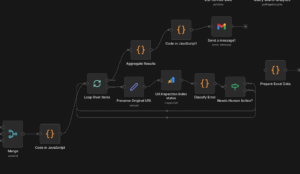
We have created automated projects that include prototyping for your website, SEO diagnostics and recommendations, ticket generation, and more.
Use Case 3: AI-Powered RAG for Knowledge Management
Teams often struggle to find information across multiple documents. HR leaders in large organizations may lack visibility into employee data.
With Retrieval-Augmented Generation (RAG):
- Internal documentation is connected
- AI performs contextual search
- Answers are generated based on verified documents
- Institutional knowledge becomes instantly accessible
Impact:
- Significant reduction in search time
- Greater team autonomy
- Scalable internal and external support
- Accurate responses in seconds
Example:
An HR director managing 500+ employees can instantly retrieve an employee’s career trajectory, achievements, and performance data to make informed talent decisions.
Or a client questions an invoice, and the AI cross-references CRM, ERP, emails, and conversation logs to provide a clear explanation instantly.
Ideal for nonprofits with extensive reporting or enterprises with complex documentation.
Use Case 4: Automated Deployment and Testing (CI/CD)
Manual software releases increase risk and slow innovation.
With CI/CD and automated testing:
- Automated testing runs before deployment
- Security validations are executed
- Automatic deployment occurs when standards are met
- Continuous monitoring ensures stability
Impact:
- Fewer production errors
- Faster innovation cycles
- Reduced operational risk
- Higher platform reliability
Use Case 5: Financial and Operational Automation
Common challenges:
- Manual monthly reporting
- Spreadsheet reconciliations
- Email-based approvals
With enterprise automation:
- Accounting and banking systems integrate
- Reports generate automatically
- Digital approval workflows replace email chains
- Real-time executive dashboards improve decision-making
Impact:
- Data-driven financial decisions
- Stronger budget control
- Reduced administrative workload
Business Process Automation vs. Digital Transformation
Not all digital transformation initiatives include real automation; many organizations implement tools but maintain manual processes behind them. True intelligent process automation requires redesigning workflows end-to-end, not just installing software.
Technology must support strategy. Not the other way around.
Sustainable Growth Requires Intelligent Systems
Organizations that scale successfully do not rely on heroic manual effort. They rely on integrated systems, AI-powered automation, intelligent workflows, and Real-time visibility.
The real question is not whether your organization can operate without automation. The real question is how much growth you’re losing by not implementing it. Because manual work rarely feels urgent… until it becomes the invisible barrier holding your organization back.
–
Chat with us 💬 or start guided assistance with Get Swapps.